
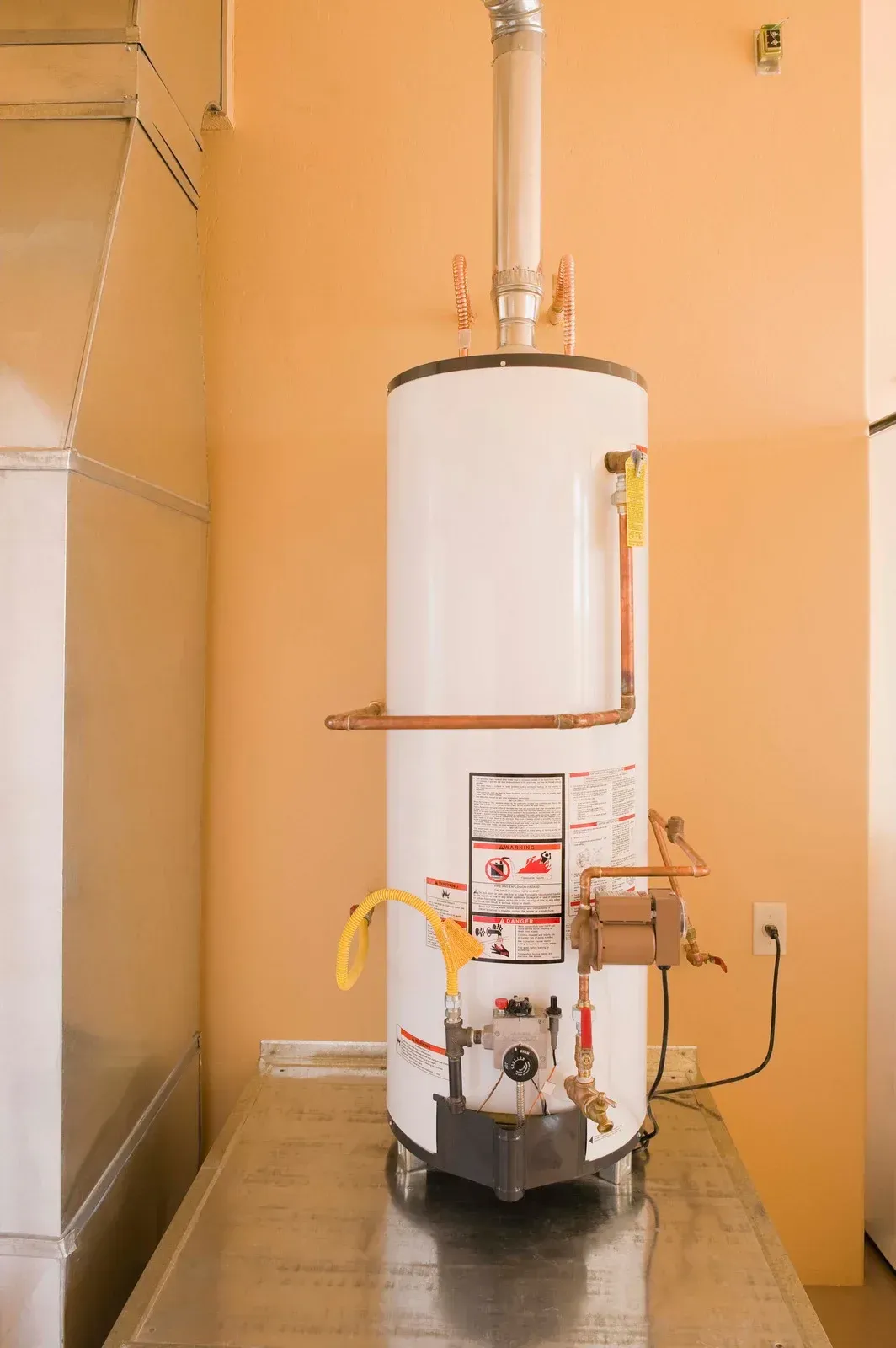
Swap a Failing Tank Before It Empties Across the Floor
Water heaters rarely fail politely. They start with a rust stain at the base, a recovery time that keeps stretching, and a relief valve that drips a little more each month, and then one morning there are 50 gallons across the garage. Murray In A Hurry Plumbing replaces aging and failed water heaters for homeowners, landlords, and business owners in Show Low, Arizona, and across Pinetop-Lakeside, Snowflake, and Taylor. Replacing a unit on your schedule costs less money and ruins fewer weekends than replacing one on the tank’s schedule.
A replacement involves considerably more than lifting one appliance out and setting another in its place. Older installations often hide undersized venting, missing expansion tanks, corroded shut-off valves, and connections nobody expected to last this long, and we correct those while the space is open. Removal and disposal of the old unit is part of the price. Drawing on 19 years of local work, we can usually source and set a standard tank the same day you call. Contact us for a free estimate.
Water Heater Replacement Services
Same-Day Emergency Replacement
A split tank is not a problem that waits until Tuesday. We shut down the supply, drain and remove the failed unit, and set a properly sized replacement the same day whenever stock and access allow, so the household is not showering cold.
Standard Tank Replacement
When the existing setup is sound and the capacity still fits, a like-for-like swap is the cleanest path forward. We replace the unit, renew the flex connectors and shut-off, and confirm the venting and relief piping meet current requirements.
Capacity Upgrades
Households change, and a tank that fit a couple ten years ago struggles once teenagers or long-term guests enter the picture. We calculate what your peak morning actually demands and step the size up where the space and gas supply support it.
Fuel Type and Equipment Conversions
Moving from electric to gas, or from a tank to a different technology, changes the venting, supply, and electrical picture all at once. We handle the full conversion, including the new connections, and remove whatever the old configuration leaves behind.
Old Unit Removal and Disposal
Nobody wants a 200-pound rusted tank sitting in the driveway for a week. We drain it, carry it out without marking your walls or flooring, and haul it away for recycling as part of the job rather than as an add-on.
Commercial Water Heater Replacement
Restaurants, salons, motels, and shops lose money the moment hot water stops. We plan replacements around your posted hours, stage the work to keep restrooms and kitchens usable, and size the new equipment for the busiest stretch of your day.
Why a Planned Replacement Pays Off
A Schedule You Control
Choosing your own replacement date means comparing options, waiting for the right unit, and booking a convenient morning. Waiting for the failure means whatever is available that afternoon, plus cleanup, plus whatever the water reached before anyone noticed.
Lower Operating Costs From Day One
Insulation values and burner efficiency have improved considerably over the past decade. A tank installed in 2012 is quietly costing you money every month it stays in service, and that gap only widens as the old unit continues to lose ground.
Recovery That Keeps Up With the House
An undersized or sediment-choked tank turns every busy morning into a negotiation. Correct capacity in a new unit ends the queue at the bathroom door and restores full temperature quickly after back-to-back demand.
Flood Risk Taken Off the Table
Failed water heaters are among the most common sources of interior water damage in a home. Retiring a tank that is past its expected life removes a stored reservoir sitting directly above or beside everything you own.
Fresh Manufacturer Warranty
New equipment resets the coverage clock, typically for six to 12 years depending on the model. Combined with a documented, code-compliant installation, that warranty means an early defect becomes a phone call rather than an expense.
Old Code Problems Corrected
Replacement day is the natural moment to fix what a previous installer skipped, whether that is missing seismic strapping, improper relief piping, or a vent connector that was never the right diameter. Doing it then costs far less than doing it later.
Retire the Tank Before It Retires Itself
Every water heater has a finish line, and the only real choice is whether you cross it on a planned Tuesday or at two in the morning with a wet shop vacuum. Replacing a tired unit ahead of failure lets you weigh capacity, fuel type, and efficiency calmly, correct whatever the last installation got wrong, and start a fresh warranty on equipment that fits how your household lives now. Murray In A Hurry Plumbing removes the old unit, installs the new one to current code, and pulls the permit as part of the work. Free estimates are always available through our contact page, and veterans receive discount.
FAQ's
Got Questions? We’ve Got Answers.
How long should a water heater last?
Standard tanks typically deliver eight to 12 years, and hard water shortens that range while annual flushing and anode replacement extend it. Once a unit passes the decade mark, planning a replacement beats waiting for the leak that ends it.
Should I repair this one or replace it?
Age is the deciding factor. A five-year-old tank with a failed element is worth repairing, while a 12-year-old unit needing a gas valve rarely is. Any leak from the tank body itself settles the question immediately.
Can you replace a water heater on the same day I call?
Usually yes for standard gas and electric tanks, provided access is workable and the size is a common one. Hybrid units, unusual capacities, and commercial equipment sometimes need ordering, and we tell you that up front.
Should I move up a size while I am replacing it?
Only if the demand justifies it. A larger tank costs more to run and needs more space, clearance, and sometimes more gas capacity. When mornings genuinely run short on hot water, though, stepping up solves it permanently.
What happens to my old water heater?
We drain it, remove it carefully, and take it away for recycling. Steel tanks and their components have real scrap value, so nothing about the old unit ends up as your problem or sitting in a landfill.
Will a new water heater lower my energy bill?
Generally yes, especially when the outgoing unit is more than ten years old or heavily scaled. Heat pump models produce the largest savings by a wide margin, though the size of the gain depends on your usage and fuel rates.
Does a replacement have to meet current code?
Yes. Once the old unit comes out, the new installation is judged against today’s requirements for venting, relief piping, expansion control, and clearances. We include those corrections in the estimate rather than surprising you mid-job.
Can I switch from electric to gas when I replace?
That depends on whether gas service reaches the property and whether a vent path exists from the heater location. When both are workable, the conversion is straightforward, and we price the gas line and venting separately so the decision stays clear.